Not all tea is created equal — and not all tea does the same thing to your brain and body. The right tea at the right time can meaningfully support sleep quality, sharpen cognitive focus, or blunt the physiological effects of chronic stress. The wrong tea at the wrong time can undermine all three.
A functional tea is one where specific, identified compounds have evidence-backed effects on a specific physiological outcome. This guide is grounded in that standard — compounds, mechanisms, and practical guidance.
Best Teas for Sleep
Chamomile Tea
Chamomile is the most evidence-backed herbal tea for sleep quality. Its primary active compound is apigenin — a flavonoid that binds to GABA receptors in the brain, the same receptors targeted by anti-anxiety medications (though with far milder effects). Clinical studies have found that chamomile extract reduces the time it takes to fall asleep, improves sleep quality scores, and reduces nighttime waking. It is caffeine-free, making it safe for evening consumption.
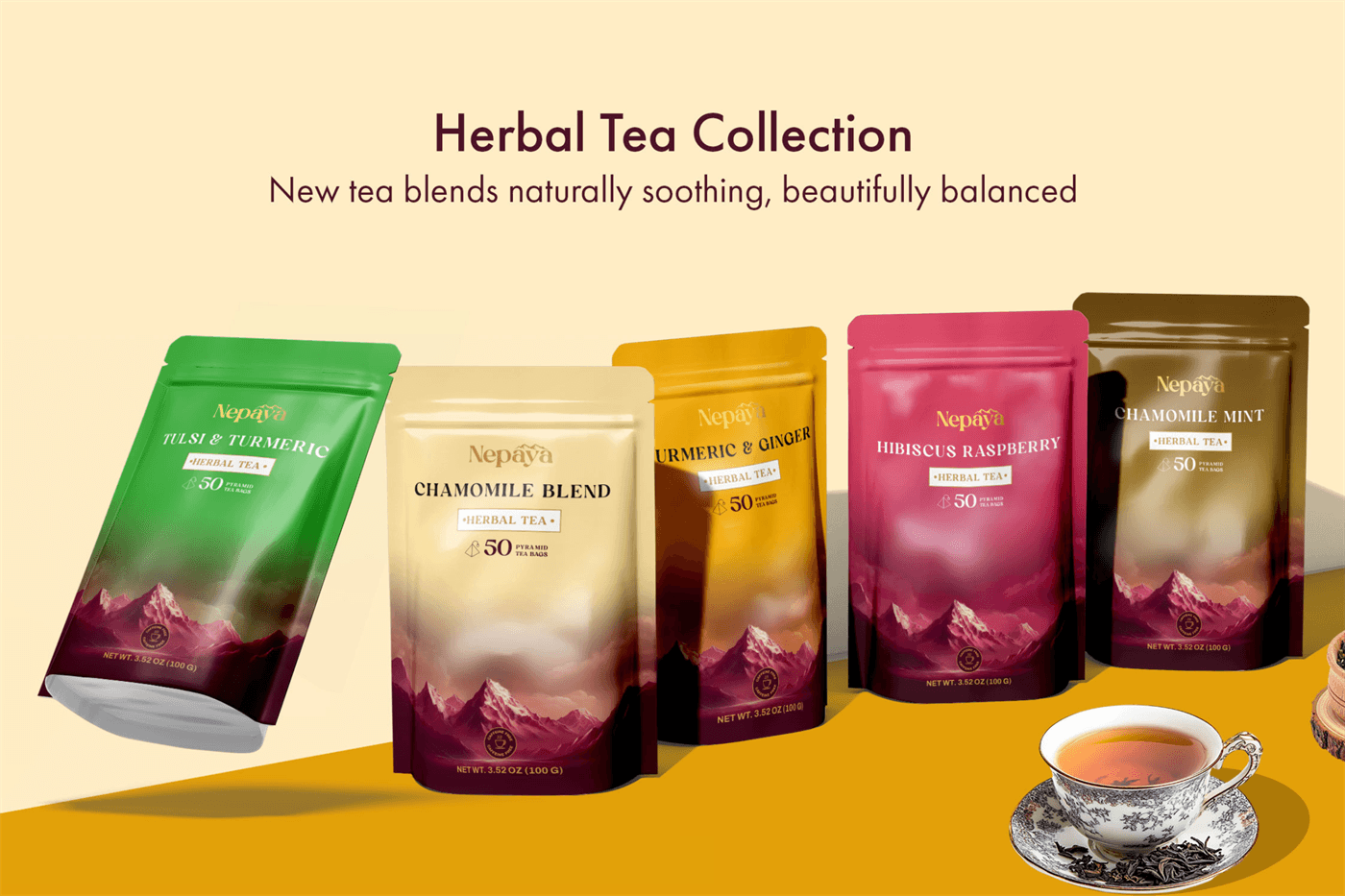
Nepaya Chamomile Blend
Pure Himalayan chamomile — floral, softly sweet, and deeply calming for deep sleep support.
Peppermint Tea
Peppermint does not directly induce sleepiness, but its muscle-relaxing menthol compounds reduce physical tension and digestive discomfort — two common barriers to sleep onset. It also has a naturally cooling effect that can help reduce core body temperature, which facilitates the transition to sleep.
Nepaya Chamomile Mint
Chamomile’s calming power with cool peppermint — a gentle, caffeine-free wind-down ritual.
For an evening ritual, Nepaya’s herbal blends provide functional support without caffeine — allowing the ritual of tea to actively contribute to sleep preparation rather than work against it.
Best Teas for Focus
Green Tea (The Gold Standard for Cognitive Function)
Green tea’s reputation for mental clarity is not unfounded. It delivers the most studied nootropic combination available in a natural food source: caffeine plus L-theanine. Multiple clinical trials have demonstrated that this combination produces superior attention, working memory, and processing speed compared to caffeine alone. The L-theanine increases alpha brainwave activity (the calm focus state) while caffeine provides the energy substrate — focused work without anxiety, jitteriness, or crash.
For cognitive performance, choose a high-altitude green tea brewed at 175°F for 2–3 minutes. This preserves L-theanine (which degrades at higher temperatures) while extracting sufficient caffeine for the synergistic effect.
Nepaya Himalayan Green Tea
Altitude-grown and naturally rich in L-theanine — the calm-focus cup for hours of productive clarity.
Altitude matters for focus teas. Himalayan-grown greens naturally contain higher concentrations of L-theanine due to slow growth conditions — which means the calm-focus benefit is more pronounced than in lower-altitude equivalents.
Best Teas for Stress Relief
L-Theanine Teas (Green and White Tea)
L-theanine has been shown in multiple human studies to significantly reduce salivary cortisol response to stressors, reduce subjective anxiety scores, and modulate the physiological stress response. Green and white teas from high-altitude sources provide the most L-theanine per cup.
Turmeric Ginger Tea
Curcumin (the active compound in turmeric) is one of the most studied natural anti-inflammatory compounds in existence. Chronic stress drives systemic inflammation; curcumin addresses inflammation through multiple pathways simultaneously. Ginger’s active compounds — gingerols and shogaols — provide additional anti-inflammatory and gut-calming effects. The gut-brain axis is bidirectional: reducing gut inflammation reduces neurological stress signalling. This combination targets both the acute and downstream effects of stress in a single cup.
Bioavailability note: Curcumin is poorly absorbed on its own. A fat-containing food consumed alongside it significantly increases effectiveness.
Nepaya Turmeric & Ginger
Anti-inflammatory, gut-calming, caffeine-free — the recovery ritual for the stressed mind and body.
Timing Your Teas for Maximum Effect
- 6–8am: Black tea or English Breakfast. Energy activation with L-theanine balance.
- 9–11am: Green tea. Peak cognitive performance window. Caffeine + L-theanine for sustained, focused work.
- 1–3pm: Green tea or white tea. Light support through the post-lunch dip without disrupting sleep.
- 4–6pm: Turmeric ginger or herbal blend. Transition to recovery mode. Anti-inflammatory, zero caffeine.
- 7–9pm: Chamomile, peppermint, or passionflower. Sleep preparation. GABA modulation, nervous system calming.
Think of functional tea not as treatment but as daily maintenance — the equivalent of movement and sleep hygiene for the nervous and immune systems.
Frequently Asked Questions
What is the best tea for anxiety?
L-theanine-containing teas (green and white) are the most evidence-backed for acute anxiety reduction, through their modulation of cortisol and neurological overexcitation. Chamomile is the strongest option for GABA-mediated calming, particularly in the evening.
Does green tea help with focus?
Yes, and this is among the most robustly evidenced effects in the functional tea literature. The caffeine-L-theanine combination produces superior attention and working memory compared to caffeine alone across multiple clinical trials.
What tea should I drink before bed?
Chamomile is the evidence-backed first choice. Peppermint for physical relaxation. Avoid any caffeinated tea within 5–6 hours of your intended sleep time.
What tea is good for stress relief?
Green and white tea for L-theanine-mediated cortisol modulation. Turmeric ginger for anti-inflammatory downstream effects. Chamomile for nervous system calming and GABA activation.