There is a reason you feel different after a cup of tea than after a cup of coffee. You get the focus without the jitteriness. The clarity without the crash. The energy without the anxiety. Science has a name for this: L-theanine.
If you have been searching for a natural way to feel more focused, less stressed, and calmer throughout the day, L-theanine may be the most important compound you have never heard of — and it has been quietly sitting in your teacup all along.
What Is L-Theanine?
L-theanine is a naturally occurring amino acid found almost exclusively in the leaves of the Camellia sinensis plant — the same plant used to make green tea, black tea, and white tea. It was first isolated from green tea leaves in Japan in 1949. Unlike most amino acids, L-theanine is not used to build proteins in the body. Instead, it crosses the blood-brain barrier and directly influences brain activity, promoting a state of relaxed alertness without causing drowsiness.
L-theanine is found almost exclusively in tea leaves, making brewed tea one of the most accessible dietary sources of this compound on the planet.
How Does L-Theanine Work in the Brain?
L-theanine works through several mechanisms that collectively produce its signature calm-but-focused effect:
- It increases alpha brain wave activity — the same brainwave state associated with relaxed focus, creativity, and meditation.
- It boosts levels of GABA, serotonin, and dopamine — neurotransmitters that regulate mood, sleep quality, and emotional balance.
- It inhibits the binding of glutamate to glutamate receptors, which reduces neural overexcitation — the mechanism behind anxiety and stress responses.
- It modulates cortisol — the primary stress hormone — helping to blunt the body’s stress response.
The result is a mental state that practitioners of mindfulness would recognise: present, clear, and calm — without sedation.
L-Theanine and Caffeine: Why Tea Feels Different From Coffee
This is where the real science gets interesting. Tea naturally contains both caffeine and L-theanine, and the two compounds work synergistically in a way that neither produces alone.
Caffeine stimulates the central nervous system, increasing alertness and energy. On its own, it can also trigger cortisol release, increase heart rate, and produce the familiar jitteriness that many coffee drinkers experience. L-theanine counteracts these unwanted effects. Multiple clinical studies have shown that the combination produces better cognitive performance — including faster reaction time, improved memory, and sustained attention — than caffeine alone.
The smooth, sustained focus you feel from tea is not a coincidence. It is biochemistry. L-theanine essentially tames caffeine’s rough edges while amplifying its cognitive benefits.
Tea drinkers in the Himalayan foothills have understood this balance intuitively for centuries. Modern neuroscience is only now catching up.
What Are the Benefits of L-Theanine?
1. Stress and Anxiety Reduction
L-theanine has been shown in multiple human studies to significantly reduce psychological stress responses and subjective anxiety, particularly in high-stress situations. It does this without causing sedation — uniquely practical for use during the working day.
2. Improved Sleep Quality
Even though L-theanine does not cause drowsiness, it improves sleep quality by promoting relaxation and reducing the mental chatter that keeps people awake. Research published in Nutrients found that L-theanine supplementation improved sleep satisfaction without affecting daytime alertness.
3. Sharper Focus and Cognitive Performance
The caffeine-L-theanine combination is one of the most well-researched nootropic stacks in existence. Studies consistently show improvements in attention, processing speed, and working memory compared to placebo.
4. Immune Support
L-theanine supports the production of T-cells — white blood cells central to immune defence — and has shown anti-inflammatory properties in several studies.
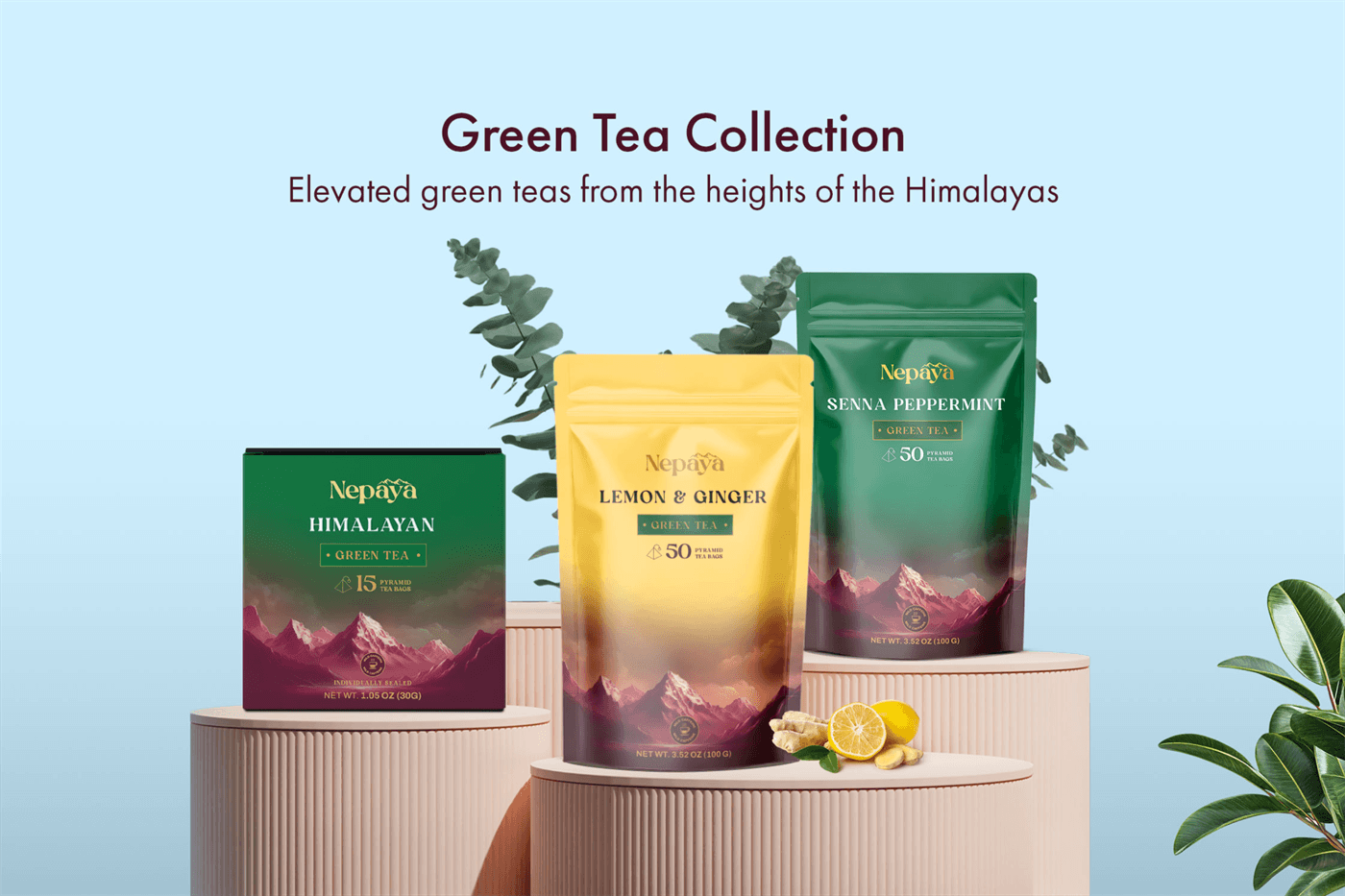
Nepaya Himalayan Green Tea
Grown above 3,000 feet — naturally richer in L-theanine due to slow growth at altitude. Pure, clean, and focused.
Which Teas Are Highest in L-Theanine?
- Green tea — highest L-theanine content, particularly high-quality shade-grown or high-altitude varieties
- White tea — gentle and naturally high in L-theanine
- Black tea — contains L-theanine but oxidation reduces levels compared to green
- Herbal teas — contain zero L-theanine (not made from Camellia sinensis)
Altitude matters too. Tea grown at higher elevations — like Himalayan teas from Nepal — develops more slowly, which concentrates beneficial compounds including L-theanine. The cool temperatures and thinner air force the tea plant to produce more protective compounds, resulting in richer, more complex chemistry in every leaf.
Nepaya Lemon & Ginger Green Tea
High-altitude green tea with bright lemon and warming ginger — calm focus with a zesty lift.
L-Theanine Supplements vs. Tea: Which Is Better?
You can buy L-theanine as an isolated supplement. But there are good reasons to get it from tea instead:
- Tea delivers L-theanine alongside caffeine in a naturally optimised ratio — something capsules rarely replicate.
- Tea contains hundreds of additional polyphenols, antioxidants, and plant compounds that work synergistically.
- The ritual of brewing and drinking tea has its own stress-reducing effects — mindfulness, warmth, pause.
- Bioavailability from brewed tea is well-established and consistent.
A supplement gives you the compound. Tea gives you the compound, its context, and a daily ritual that reinforces the calm you are trying to build.
Nepaya’s pyramid tea bags are designed with a larger infusion chamber specifically to allow full leaf movement and maximum compound extraction — including L-theanine.
Frequently Asked Questions
How much L-theanine is in a cup of tea?
A standard cup of green tea contains approximately 25–60mg of L-theanine, depending on the variety, altitude of growth, and steeping method. Higher-altitude, shade-grown teas tend to be at the upper end of this range.
Does L-theanine make you sleepy?
No. L-theanine promotes relaxation without causing sedation. It increases alpha brain waves — associated with a calm, focused state — rather than the theta or delta waves associated with drowsiness.
Is L-theanine safe?
L-theanine has been consumed in tea for thousands of years and has an excellent safety profile. It is classified as GRAS (Generally Recognized As Safe) by the FDA. Studies using doses far higher than what you would get from tea have found no adverse effects.
Can I get L-theanine from herbal tea?
No. L-theanine is found only in the Camellia sinensis plant. Herbal teas — chamomile, peppermint, rooibos — do not contain it.